
India's net oil and gas import bill surged by 60 per cent year-on-year to USD 16 billion in October, driven by Brent crude prices nearly doubling, while cooking gas consumption simultaneously saw a significant decline.

Indian benchmark indices Sensex and Nifty closed flat, paring early gains due to renewed hostilities between the US and Iran, which unsettled investor sentiment and led to profit booking in metal, oil & gas, and telecom shares.

Amidst global energy market volatility driven by the West Asia crisis, Russia has proposed increasing its crude oil and natural gas supplies to India, strengthening bilateral energy ties and aiming for USD 100 billion in annual trade by 2030.

The escalating conflict in West Asia has resulted in 19 ships carrying essential energy resources for India being stranded in the Strait of Hormuz, raising concerns about potential disruptions to the country's energy supply.

Indian benchmark stock indices, Sensex and Nifty, closed higher on Monday, driven by sustained foreign fund inflows and a decline in crude oil prices. The Sensex gained 512 points, while the Nifty settled near 25,300.

A fire broke out at ONGC's NQG oil platform off the Mumbai coast on Monday morning due to a ruptured gas cooler finger. The fire was brought under control by personnel from a nearby platform, with no injuries reported. Despite the incident, a company official confirmed that operations have not been impacted, preventing potential significant revenue losses from the crucial Mumbai High field.

The Supreme Court has appointed former top court judge Ranjana Prakash Desai as the sole mediator in the Krishna-Godavari basin gas migration dispute involving Reliance Industries and others, after parties failed to find a solution.

US President Donald Trump has issued a waiver from sanctions under the Sanctioning Russia and Iran Act, citing national interest. This move comes after a deal with Russia for diesel supply and ahead of a US official's visit to India, where concerns about the act's impact on India's oil imports were raised.

A Crisil report indicates that India is the world's fastest-growing polymer compound market, contributing 13% to the global industry. Driven by increased manufacturing in automotive, electronics, and infrastructure, the domestic sector is projected to reach USD 16.5 billion by FY2031, with significant demand from various pipeline and cable segments.
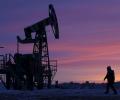
Crude oil prices are set for another volatile week with an upward bias, as ongoing US-Iran negotiations and heightened geopolitical risks, particularly concerning energy shipments through the Strait of Hormuz, continue to influence the market, according to analysts.

Mining magnate Anil Agarwal has cautioned that the government's decision to transfer operations of a producing offshore oil and gas block from Vedanta to state-run ONGC could send a "very wrong signal" to investors, urging policymakers to maintain regulatory stability.

Indian stock markets experienced a significant downturn, with the Sensex plunging 1,124 points to a six-month low and the Nifty closing below 22,800, driven by surging crude oil prices, escalating geopolitical uncertainties, and weak global market trends.

They had bought Rs 29,631 crore worth of shares in August.

Indian benchmark stock indices, Sensex and Nifty, rebounded on Friday, driven by value buying in banking, oil & gas, and auto shares following recent sharp losses. The Sensex climbed 315.20 points to settle at 73,895.74, while the Nifty rose 77.40 points to 23,140.50.

Financial services attracted the bulk of the inflows, followed by telecommunications, automobiles and information technology.

Indian benchmark indices, Sensex and Nifty, closed higher on Thursday, breaking a three-day losing streak, driven by late buying in financial heavyweights like HDFC Bank and Axis Bank, despite persistent geopolitical tensions and crude oil prices exceeding USD 100 per barrel.

State-run Oil and Natural Gas Corporation (ONGC) has made a significant gas discovery in the deep waters of the Mahanadi Basin off the Odisha coast, recording encouraging flow and sustained reservoir pressure, a breakthrough for India's deepwater exploration programme.

India's current account deficit could widen to 1.7 per cent of GDP, or about $71 billion, if crude oil prices stay above $90 a barrel for a significant part of the second half of FY27.

'India should not trade away its energy security for temporary tariff relief. Neither signing a trade agreement nor stopping Russian oil purchases can protect it from future US action.'

Indian benchmark indices, Sensex and Nifty, experienced a significant downturn, with Sensex tanking 778 points and Nifty closing at a five-month low, driven by surging crude oil prices, geopolitical tensions, and fears of further interest rate hikes by major central banks.

Prime Minister Narendra Modi on Sunday said the Bharatiya Janata Party-led central government is taking steps to reduce imports of crude oil and gas, focusing more on exploration of fossil fuels and green energy.

China has strongly rejected a US bill that would impose tariffs on countries, including India, for purchasing Russian oil and gas. Beijing views the "Lindsey O Graham Sanctioning Russia and Iran Act 2026" as an act of "long-arm jurisdiction" and interference in its sovereign trade relations, asserting that its economic cooperation with other nations is based on equality and mutual benefit.

Indian stock market investors are closely monitoring crude oil prices, geopolitical developments in West Asia, and the implications of the US Sanctioning Russia and Iran Act, which could impose tariffs on countries, including India, that purchase Russian crude.

The benchmark Sensex plummeted 813 points to a three-month low, with the Nifty settling below 23,450, as escalating tensions in West Asia drove crude oil prices above USD 100 per barrel, leading to widespread selling in IT, FMCG, financial services, and oil & gas shares.

A new study reveals that achieving net-zero emissions involves more than just reducing greenhouse gases; it necessitates considering the broader environmental consequences of the technologies and resources employed. Different clean energy pathways exert varying pressures on mineral, land, and water resources, highlighting the need for a balanced approach to decarbonisation that addresses overall environmental sustainability.

An IndianOil officer, Mahesh Shelke, was fatally attacked with a sharp weapon while inspecting a petrol pump in Hingoli district, Maharashtra. Petroleum Minister Hardeep Singh Puri and Indian Oil Corporation have called for swift and strict action against those responsible. The incident draws parallels to the 2005 killing of another IOC officer, S Manjunath.

The US House of Representatives is debating a bill that would authorise the President to impose sanctions on Russia and steep tariffs on its oil and gas trading partners, including India and China. The bill, aimed at pressuring Russia over the Ukraine war, has faced opposition but is expected to be put to a vote.
State-run ONGC plans a massive Rs 1 trillion investment in deepwater exploration over the next five years, aiming to drill 87 wells to counter declining domestic crude oil and natural gas production. The company is also establishing a trading firm and its overseas arm, OVL, is pursuing operatorship of assets in Venezuela.

rediffGURU Nayagam PP, a career coach and founder of EduJob360 guides students and working professionals on how to pick the right skills and career path.

Central Public Sector Enterprises (CPSEs) have achieved nearly 60 per cent of their FY27 annual capital expenditure (capex) target of approximately 8.43 trillion during April-October, broadly aligning with the previous financial year's performance. This significant spending, up 13 per cent year-on-year, is a crucial component of India's investment-led growth strategy.

Donald Trump announced a landmark agreement with Venezuela, claiming it to be the 'biggest oil deal in world history'. The deal reportedly grants the US majority control over more than 65 billion barrels of Venezuela's proven crude oil reserves, aiming to double American oil reserves and lower domestic gasoline prices.

A new study reveals that past emissions from major oil, gas, coal, and cement producers will continue to impact Earth's environment for centuries, even if emissions cease today. The research highlights that the planet will remain significantly warmer than pre-industrial levels, leading to persistent climate damages and increasing the likelihood of future extreme weather events, forming the basis for accountability lawsuits against these "carbon majors."

'In the current environment, India is effectively paying a premium for supply security and diversification.'
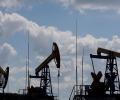
A tripartite pact -- amid the promise of removing AFSPA from almost all of the North East -- revives hydrocarbon exploration along the Assam-Nagaland border after decades of dormancy.
Indian benchmark stock indices, Sensex and Nifty, extended their winning streak for a third consecutive day, driven by positive global market trends and a significant softening of crude oil prices following a peace deal between the US and Iran.

China sailed through the crisis in the Strait of Hormuz relatively unscathed even as the impact of its steps shielded other consuming nations from having to pay high crude oil prices.

India's Wholesale Price Index (WPI)-based inflation climbed to 12.29 per cent in October, primarily due to increased prices of fuel and power, food articles, minerals, and non-food items, marking a significant rise from September's 11.39 per cent.
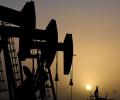
A substantial deposit of petroleum and natural gas has been discovered in Pakistan's territorial waters, a cache so large its exploitation could change the country's destiny, according to a media report. A three-year survey was undertaken in collaboration with a friendly country to verify the presence of the oil and gas reserves, DawnNewsTV quoted a senior security official as saying on Friday.
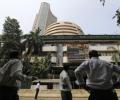
Analysts predict that the US midterm election results, which saw Democrats gain control of Congress, will primarily influence Indian markets through changes in global financial conditions, trade policy expectations, and geopolitical developments, with a keen focus on the US administration's actions in West Asia and their potential impact on crude oil prices.

India's core infrastructure industries recorded a significant growth of 7.9 per cent in September 2026, up from 3.1 per cent in the previous year, primarily fuelled by robust performances in iron ore, electricity, and cement production.
